

끝까지 하는 사랑이 끝까지 나를 따라올 때 (요한복음 13:1,18-30)
“유월절 전에 예수께서는, 자기가 이 세상을 떠나서 아버지께로 가야 할 때가 된 것을 아시고, 세상에 있는 자기의 사람들을 사랑하시되, 끝까지 사랑하셨다”(요한복음 13: 1)
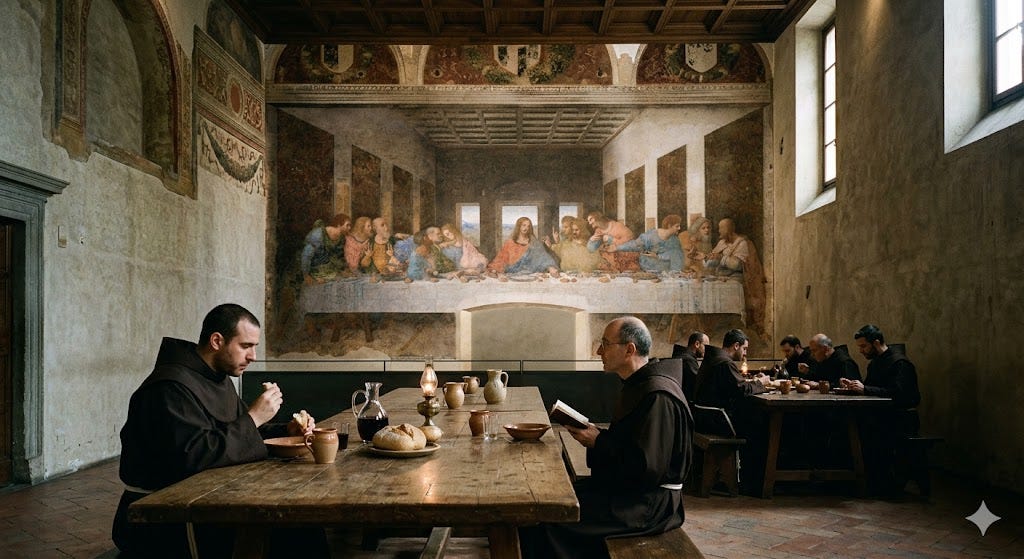
예수님과 제자들의 마지막 식사에 대한 장면을 많은 화가들이 화폭에 남겼다. 그 가운데 가장 유명한 작품은 다빈치의 “최후의 만찬”이다. 이 그림에서 다빈치는 예수님을 중심으로 제자들을 좌우에 일렬로 배치했는데, 이 구도에는 많은 의도가 담겨 있다. 다빈치는 예수님이 “너희 중 한 사람이 나를 팔리라”고 말씀하신 직후, 제자들이 보인 찰나의 심리적 동요를 한눈에 보여주고 싶었던 것 같다. 그리고 당시에는 혁신적이었던 원근법을 완벽하게 구현해서 찬장의 격자, 벽면의 태피스트리, 식탁의 선들이 모두 예수님의 머리를 소실점으로 모이게 설계했던 것이다. 그러나 이것은 어디까지나 화가의 미술적 장치일 뿐, 당시의 문화와 풍습을 고려했을 때, 그리고 성경에 언급된 장면들을 고려했을 때, 이런 구도는 사실적이 아니다.
이제 실제로 만찬이 있었던 그 방과 그 식탁으로 가보자. 식탁은 트리클리니움이라고 불리는 ㄷ자 형태의 낮은 상이었을 것이다. 참석자들은 바닥을 왼팔로 지탱하고 비스듬히 기대 반쯤 누운 자세를 하고 오른손으로 음식을 먹었다. 그래서 요한의 경우 예수님의 오른쪽에 앉았기 때문에 마치 예수님의 품에 안긴 듯한 모양새가 된 것이다. 그렇다면 예수님의 왼쪽에는 누가 예수님을 안은 듯한 모습으로 앉았을까? 가롯 유다가 가장 유력한 인물이다. 그는 예수님이 떡 조각을 찍어 건네줄 수 있는 자리에 있었다(요한복음 13:26). 그리고 “내가 이 떡 조각을 적셔서 주는 사람이 바로 그 사람이다”라고 말씀하셨을 때, 그 말을 들은 사람은 요한과 유다밖에 없었다고 생각된다. 만약 다른 제자들이 이 말을 들었다면 유다가 무사히 그 방에서 나갈 수가 없었을 테니까. 제자들은 그 다음 말만 들었을 것이다. “네가 할 일을 어서 하여라” 그래서 유다가 방을 나갈 때도 예수님의 심부름을 하러 가는 줄로 여겼던 것이다. 겉으로 보이는 식탁의 분위기는 매우 따뜻하고 아늑하다. 약간 어둡지만 부드러웠을 촛불. 갓 구운 빵 냄새. 고급지진 않더라고 익숙하고 정겨운 와인의 향기. 서로 품에 안긴 듯한 자세가 만들어주는 친밀감. 그리고 그들은 방금 주님이 발을 씻어주셔서 아주 개운하고 만족한 느낌으로 만찬을 즐길 수 있었을 것이다.
겉으로 느껴지는 아늑함과 달리 유다의 마음은 요동치고 있었을 것이다. 요한복음 13:2절에 의하면, 저녁 먹을 때에 마귀가 이미 시몬 가룟의 아들 유다의 마음속에 예수를 팔아 넘길 생각을 불어넣었다고 했다. 그러고 나서 예수님이 떡 조각을 적셔서 주는 사람이 바로 자기를 팔아넘길 사람이라고 말씀하심과 동시에 떡 조각을 찍어 유다에게 주었다. 위에서 말한 대로 그 말은 요한과 유다만 들었다. 그리고 예수님이 떡 조각을 유다에게 건넸다. 유다가 “떡 조각을 받자, 사탄이 그에게 들어갔다”(27절)고 한다. 정리해 보면, 예수님은 유다의 마음을 알고 계셨다. 그러면서도 그의 발을 씻겼고, 그를 자신의 왼편에 앉혀서 마치 자신을 유다에게 맡기는 듯한 자세를 취하셨다. 그리고 구체적인 말씀으로 경고를 보내셨다. 유다의 입장에서는 배반의 마음을 먹긴 했지만 돌이킬 기회가 거듭해서 주어지고 있었던 셈이다. 발을 씻으실 때도 너희 모두가 다 깨끗한 것은 아니라는 말씀으로 유다만 알아들을 수 있게 언질을 주셨고, 예수님을 품에 안은 모습으로 식탁에 앉힌 것도 유다에게 주신 기회였다. 또다시 유다와 요한만 들을 수 있는 목소리로 배반을 경고하신 것도 기회였다. 그리고 마지막으로 떡 조각을 건넸다. 돌이킴의 기회는 여기까지였다. 만약 유다가 떡 조각을 받지 않았다면 어떻게 되었을까 궁금해진다. 유다의 배신은 성경에 기록된 예언의 성취로 간주되고 있기에, 그렇지 않았다면 이란 가정 자체가 무색하지만, 어쨌든 예수님이 유다에게 거듭거듭 돌이킴의 기회를 제공하고 있는 것은 사실이다. 유다는 떡 조각을 받아드는 것이 뭘 의미하는지를 알고 있었지만 그렇게 마음을 굳힌 것이다. 유다의 마음 안에서 벌어진 싸움에서 사탄이 최종적으로 승리한 것이다. 그것을 성경은 “사탄이 그에게 들어갔다”고 표현했다. 유다가 나가자, “때는 밤이었다”고 성경은 슬프게 탄식한다. 끝까지 사랑하셨던 그 사랑이 끝끝내 거부당한 슬프고 아픈 배반의 밤이었다.
차가웠을 유다의 밤이 어느 날 문득 우리의 방문 밖에도 펼쳐질지 모를 일이다. 우리가 어떤 나쁜 마음을 먹었다고 해서 다 나쁜 결과로 이어지는 것은 아니다. 끝까지 우리를 사랑하면서 끝까지 따라오는 사랑이 있기에 돌이킴의 기회는 항상 있다. 그렇다고 기회가 영원히 계속되는 것은 아니다. 만약 당신이 어떤 심각하고 최종적인 결정을 앞두고 있다면, 한 번만 더 생각해 보자. 한 번만 더 나를 뒤쫓아 끝까지 따라오는 이 사랑을 생각해 보자. 내 발을 씻기시는 그분의 손길을 느껴보자. 내 품에 전해지는 그분의 체온을 느껴보자. 내 손에 들려진 떡 조각에 담긴 그분의 마음을 조금만 더 생각해 보자. 이 사랑이 베풀고 있는 배려와 기회들을 생각해 보자. 그 사랑이 아무리 어두운 밤도 물리칠 유일한 빛일 테니까 말이다. 유다가 실패했다고 해서 우리도 실패해야 하는 것은 아니니까 말이다.
Loved to the End, Pursued to the Last (John 13:1, 18-30)
“It was just before the Passover Festival. Jesus knew that the hour had come for him to leave this world and go to the Father. Having loved his own who were in the world, he loved them to the end.” (John 13:1, NIV)
Many artists have captured the scene of Jesus and his disciples’ last meal on canvas. Among them, the most famous work is Da Vinci’s ‘The Last Supper’. In this painting, Da Vinci depicted the disciples seated in a single row with Jesus at the center—a composition steeped in profound intentionality. It seems he wished to capture, in a single glance, the fleeting psychological turmoil of the disciples immediately after Jesus declared, “Truly I tell you, one of you will betray me.” He perfectly implemented the perspective that was revolutionary for its time, designing the coffers of the ceiling, the tapestries on the walls, and the lines of the table to converge at a vanishing point right at the head of Jesus. Yet, this remains a purely artistic device; when considering the culture and customs of the time, as well as the scenes described in the Bible, such a structure is far from realistic.
Let us now step into that actual room and toward that very table where the supper took place. The table would have been a low, U-shaped arrangement known as a triclinium. Guests would support themselves on their left arms, reclining at an angle, and eat with their right hands. Thus, in the case of John, sitting to the right of Jesus, he would have appeared as if leaning back against Jesus’ chest. Then, who sat to the left of Jesus, leaning in as if being embraced by Him? Judas Iscariot is the most likely figure. He was in a position where Jesus could dip a piece of bread and hand it directly to him (John 13:26). And when Jesus said, “It is the one to whom I will give this piece of bread when I have dipped it in the dish,” it is believed that only John and Judas heard those words. Had the other disciples heard them, Judas might not have left that room alive. They likely only heard the words that followed: “What you are about to do, do quickly.” So, even as Judas left the room, they assumed he was going on an errand for Jesus. On the surface, the atmosphere of the table was remarkably warm and cozy. The candlelight—perhaps dim, yet soft. The scent of freshly baked bread. The aroma of wine, perhaps not exquisite, but familiar and inviting. The intimacy created by the posture of leaning into one another. Having just had their feet washed by the Lord, they must have been enjoying the meal with a sense of profound refreshment and contentment.
Despite the outward coziness, Judas’s heart must have been in upheaval. According to John 13:2, “The evening meal was in progress, and the devil had already prompted Judas, the son of Simon Iscariot, to betray Jesus.” Then, just as Jesus identified the betrayer as the one to whom He would give the dipped bread, He handed the morsel to Judas. As mentioned, only John and Judas heard the identification. Jesus handed the bread to Judas. “As soon as Judas took the bread, Satan entered into him” (v. 27). To put it simply, Jesus knew what was in Judas’s heart. Nevertheless, He washed his feet, seated him at His left hand—placing Himself, in a sense, in Judas’s care—and sent him warnings through specific words. From Judas’s perspective, though he had harbored betrayal in his heart, he was being given opportunity after opportunity to turn back. When washing the feet, Jesus gave a hint only Judas could understand by saying not all of them were clean; seating him at the table in such a way that he was embraced by Jesus was another chance. Warning of the betrayal in a voice only Judas and John could hear was yet another chance. And finally, He handed him the bread. This was the final threshold of the opportunity to return. One cannot help but wonder: what if Judas had not taken the bread? Since Judas’s betrayal is regarded as the fulfillment of biblical prophecy, the premise of “what if” may be moot, but it remains a fact that Jesus repeatedly offered him the chance to turn back. Judas knew exactly what receiving that bread meant, yet he hardened his heart. In the battle waged within his heart, Satan claimed the final victory. The Bible describes this as: “Satan entered into him.” As Judas left, the Scripture breathes a sorrowful sigh: “And it was night.” It was a night of bitter betrayal, where the love that loved to the end was ultimately rejected.
That same cold night that claimed Judas may one day unfold outside our own doors. Just because we harbor an ill intent does not mean it must inevitably lead to a tragic end. Because there is a love that loves us to the end—a love that follows us to the very end—there is always a chance to turn back. Yet, those opportunities do not last forever. If you find yourself facing a grave and final decision, think just one more time. Think once more of this love that chases after you, following you to the end. Feel the touch of His hands as He washes your feet. Feel the warmth of His body pressed against your chest. Linger just a moment longer in the warmth of the love held within the piece of bread in your hand. Reflect on the grace and the chances this love is extending to you. For that love will be the only light capable of dispelling even the darkest night. Just because Judas failed does not mean we must fail as well.